We digitized delivery. We did not redesign learning.

By
Todd Zipper
The Last Inflection Point Didn’t Solve the Core Problem
For more than two decades, education has had access to one of the most transformative technologies in modern history: the internet.
It reshaped commerce, media, and communication.
In education, it expanded access. Online programs grew. Hybrid models became mainstream. Learning management systems digitized classrooms.
And yet, the core equation of education did not fundamentally change.
Costs continued to rise across both higher education and K–12. Over the past two decades, tuition for college and per‑pupil spending in K-12 have steadily increased according to federal education data, even as affordability concerns intensified.
At the same time, national assessment results in core subjects such as math and reading have shown stagnation and, in recent years, decline. Public confidence in institutions has also eroded.
Student outcomes, particularly in foundational subjects, have remained uneven at best.
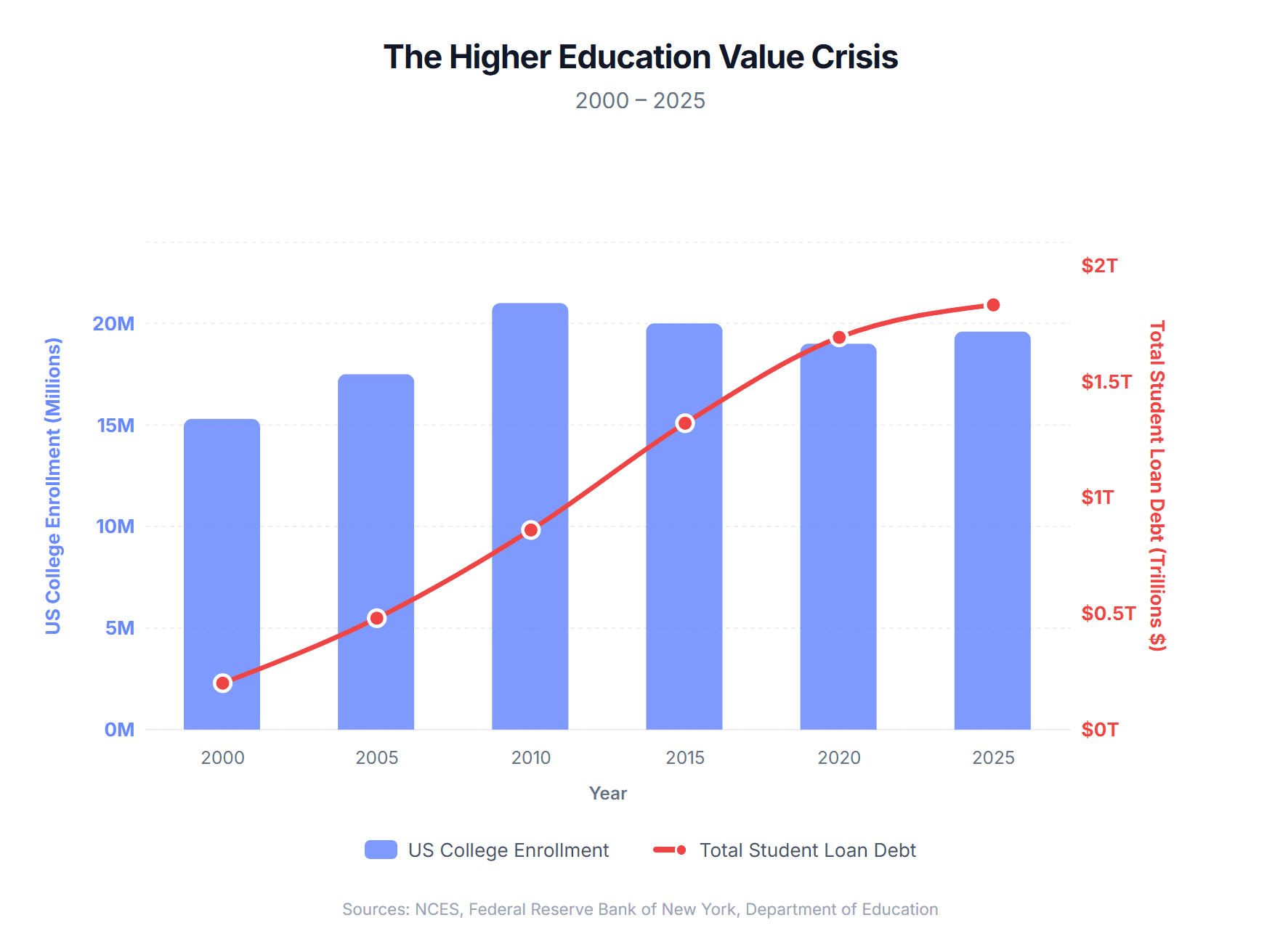
We scaled access. We did not solve the iron triangle of affordability, accessibility, and outcomes.
That matters as we enter the next technological shift.
Automation Is Not the Same as Transformation
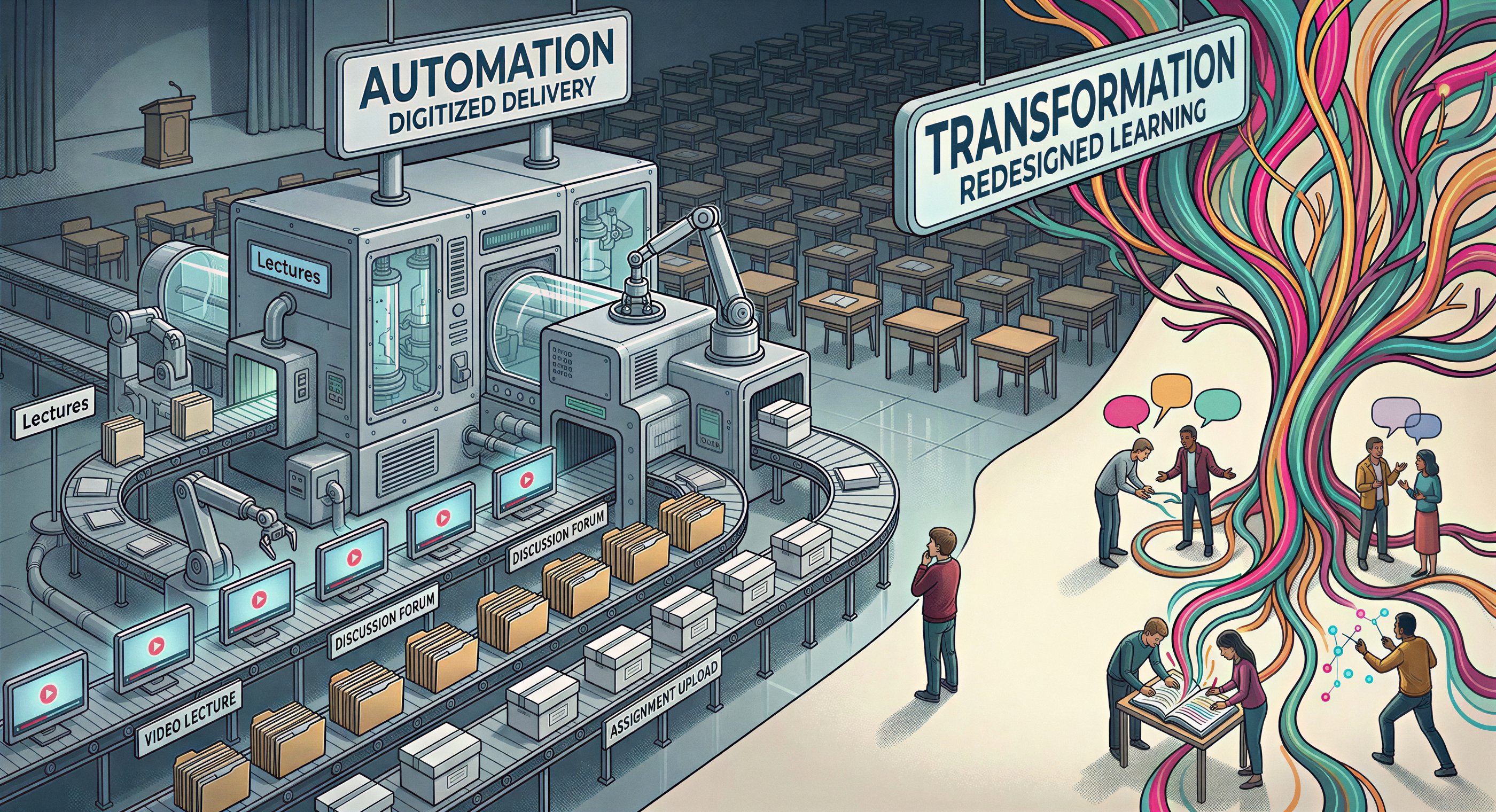
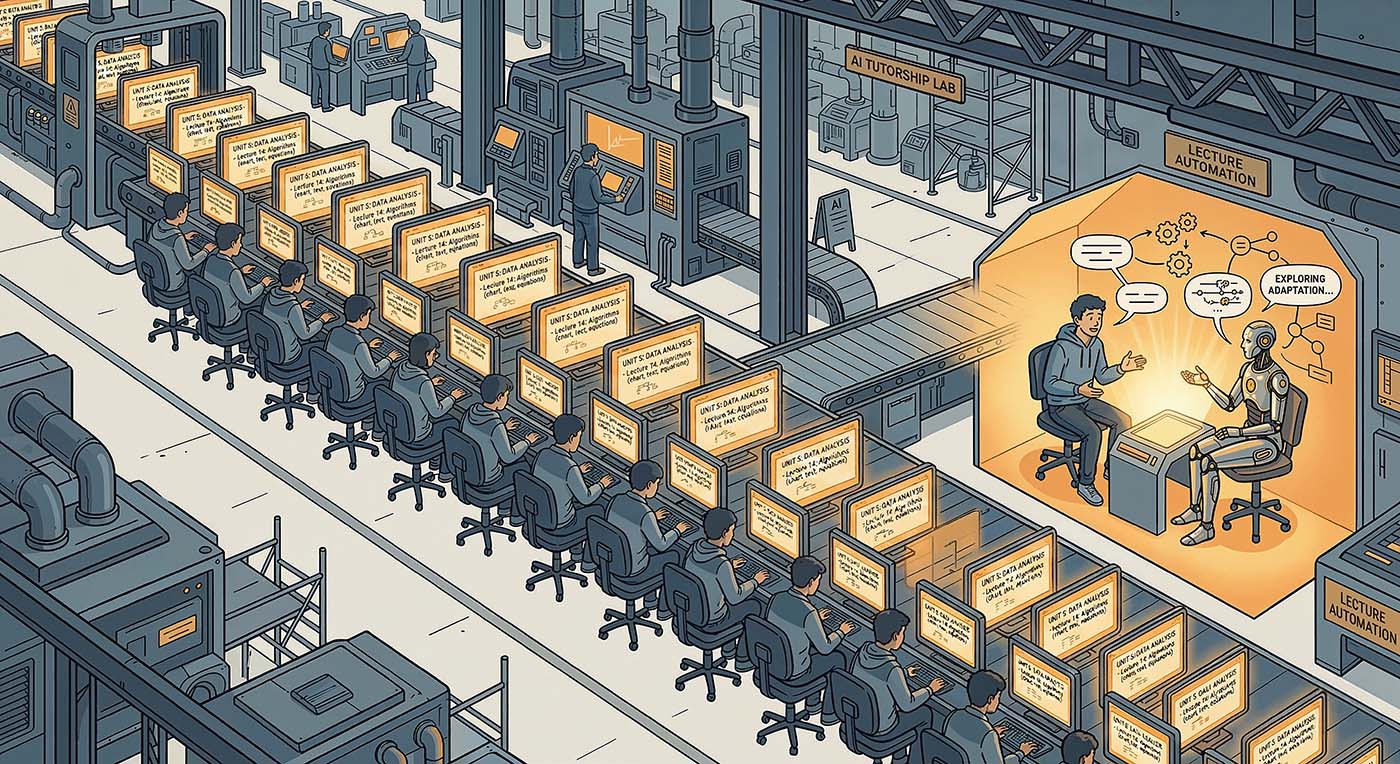
Over the past 25 years, most institutions used digital tools to replicate the traditional model in an online environment.
Lectures became videos. Discussion became forums. Assignments became uploads.
Administrative systems improved efficiency. Content became easier to distribute. But the core learning experience remained largely unchanged.
We digitized delivery. We did not redesign learning.
That distinction is critical.
Because when we talk about AI in education today, we risk repeating the same pattern: using new technology to optimize the old model rather than rethink it.
What Bloom Taught Us About Personalization

In 1984, Benjamin Bloom published research showing that students receiving one-on-one tutoring performed two standard deviations better than students in conventional classrooms.
The implication was not that classrooms are ineffective. It was that personalized instruction is dramatically more effective.
The constraint has always been scale.
We have never had enough exceptional teachers to deliver individualized guidance to every student.
That is the problem worth solving.
What Is Different Now
What makes this moment different is not simply that AI exists. It is that AI systems can now operate interactively.
When I refer to "agentic AI," I mean AI systems that do more than generate content. They coordinate multiple actions, ask questions, adapt to responses, and guide a learner through a structured process. They can simulate elements of tutoring by responding dynamically rather than delivering static information.
If we use AI to summarize documents faster, we repeat the past. If we use AI to enable interaction, feedback, and personalization at scale, we begin to address the personalization gap Bloom identified decades ago.
That is the inflection point.
From Automation to Interaction
Institutions have invested heavily in digital infrastructure. We adopted learning management systems. We expanded online programs. We layered analytics, dashboards, and workflow tools across the enterprise. These systems made institutions more manageable and, in many cases, more scalable.
But most of that innovation optimized operations far more than it transformed learning.
Students still move through courses in largely the same way. They consume content, submit assignments, receive grades, and move on. The format changed. The instructional core did not.
That is what must change now.
If AI is used primarily to automate existing workflows — faster grading, quicker summaries, more efficient content generation — we will simply accelerate the same model. Costs may improve at the margins. Administrative burden may decrease. But the learning experience itself will remain structurally similar.
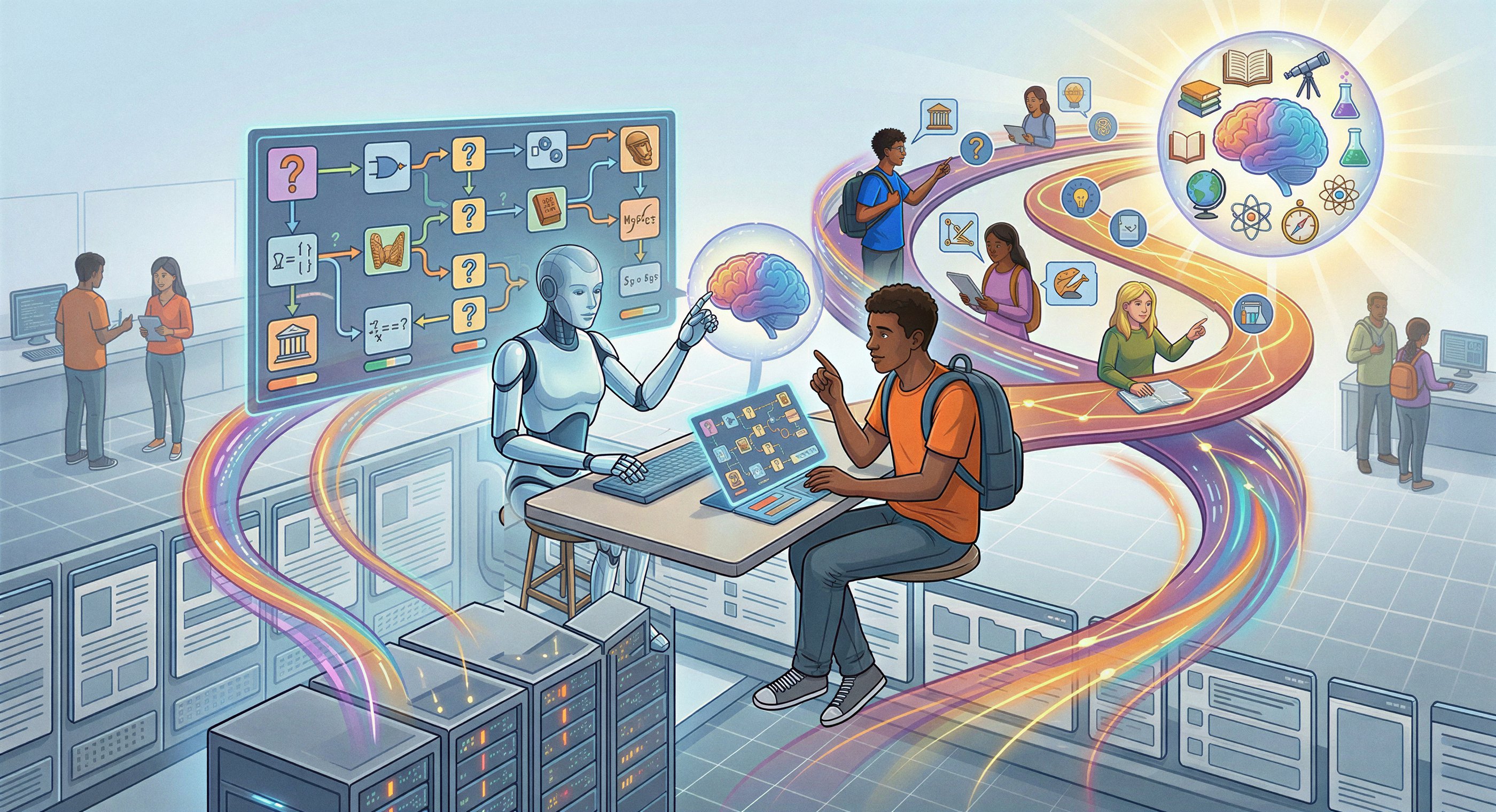
The real opportunity is different. It is to design educational systems that interact with students the way strong teachers do: asking questions, probing for understanding, adjusting explanations, and guiding progression toward mastery.
That shift from automating tasks to enabling interaction is not cosmetic. It is architectural. It reorients the system around how students think and learn, rather than how institutions deliver and manage content.
If we get that right, we move beyond efficiency and toward effectiveness. If we do not, we risk repeating the last 25 years with a more powerful tool set.
A Measured but Real Opportunity
Technology alone does not change systems. Incentives, design choices, and institutional will matter as much as capability.
But for the first time, we have tools that can operate at the level of interaction rather than just distribution.
If institutions treat AI as another layer of automation, little will change. If they use it to personalize learning experiences at scale, we may finally begin to shift the iron triangle.
That is the opportunity in front of us.